


 So instead of me testing your knowledge about Heroes--classic, anti and tragic not to mention the Hero's Journey with paper and pen we're going to have a Socratic Seminar--which is really a formal dialogue where you can't call your peers names or hit them because they don't (shock) think exactly as you do.
 So, what's our goal here? Really? My over arching goal here is to see how much you learned from the lessons about heroes and can you identify the common 'heroic' traits in popular or to use a fancy word, contemporary culture. I want you to question the idea of what is a hero. For example:Is Beowulf a classic hero?, Do you see Oedipus as the tragic hero? or perhaps Can you argue that Achilles is an anti-hero? What other options did Jocasta have besides willingly killing child?
You will use literature we read in class combined with the revised Bloom's taxonomy (this version is a little different than we used in class, but it shows you the domains and question stems) to write twelve, yes 12 questions {two for each domain}about heroes, how pop culture views heroes or heroines (girl hero), do heroes even exit anymore? This is your chance to open a dialogue about your views on the Hero's Journey, definition or examples of the anti-hero or tragic hero we discussed in class. Even if you don't have a 'real' opinion on heroes you must realize that they do create an impact on society. So, I want to know what you think. You must ask a minimum of two questions to earn a "C" on this assignment. Think of this seminar as your final.
Remember, you will NOT know if you will be in the discussion circle or observation circle until you walk in class the day of the seminar. Below you will find blurbs about the pieces of literature I will expect you to have an opinion on since we read them in class. If your questions are interesting, I promise you the conversation will be even more interesting because it will spark a real conversation between you and your classmates.
 Beowulf (pg.33) Beowulf must defeat
the monster Grendel and his mother in order to achieve his classical hero
status. He finds his sword made by Giants in the watery lair of Grendel's mother--it is this that allows him to behead both monsters. He collects his gold from Hrothgar and goes home. Once home he becomes king of the Geats, in his later years he sacrifices his life in order to save his people from
the dragon, Wiglaf tries to help Beowulf, but he ultimately dies. Wiglaf becomes the next king building a large tower to immortalize the great king Beowulf.
Beowulf (pg.33) Beowulf must defeat
the monster Grendel and his mother in order to achieve his classical hero
status. He finds his sword made by Giants in the watery lair of Grendel's mother--it is this that allows him to behead both monsters. He collects his gold from Hrothgar and goes home. Once home he becomes king of the Geats, in his later years he sacrifices his life in order to save his people from
the dragon, Wiglaf tries to help Beowulf, but he ultimately dies. Wiglaf becomes the next king building a large tower to immortalize the great king Beowulf.  Gilgamesh
(pg. 48)- Gilgamesh decides
that he will fight the evil Humbaba, a servant to the gods. His friend Enkidu
tries to persuade Gilgamesh from this, but he is seeking glory and the elders
of Urk, hoping for glory support Gilgamesh. Enkidu and Gilgamesh set out for
the forest where Humbaba is they are tormented with dreams of death and terror.
The next day Gilgamesh chops down a cedar tree calling Humbaba they fight, G’s
distracted, Humbaba goes after Enkidu, G is tempted with the Humbaba’s
promises, Enkidu reminds G of his task. G kills Humaba and leaves his head
swinging from the trees while he takes care of Enkidu.
Gilgamesh
(pg. 48)- Gilgamesh decides
that he will fight the evil Humbaba, a servant to the gods. His friend Enkidu
tries to persuade Gilgamesh from this, but he is seeking glory and the elders
of Urk, hoping for glory support Gilgamesh. Enkidu and Gilgamesh set out for
the forest where Humbaba is they are tormented with dreams of death and terror.
The next day Gilgamesh chops down a cedar tree calling Humbaba they fight, G’s
distracted, Humbaba goes after Enkidu, G is tempted with the Humbaba’s
promises, Enkidu reminds G of his task. G kills Humaba and leaves his head
swinging from the trees while he takes care of Enkidu.  Death of Hector (pg.
58)- Athena tricks Hector by taking on the appearance
of his brother giving Achilles the advantage. Hector and Achilles fight, when
Hector realizes he is going to die he asks Achilles to give his body back to
his parents for a proper burial. Achilles’ laughs and tells him he plans on
defiling his body. Achilles’ and his men
stab at Hector’s body; they tie him up by his ankles and attach them to Achilles’
chariot dragging the body back to the wharf where the dogs can pick at his
flesh.
Death of Hector (pg.
58)- Athena tricks Hector by taking on the appearance
of his brother giving Achilles the advantage. Hector and Achilles fight, when
Hector realizes he is going to die he asks Achilles to give his body back to
his parents for a proper burial. Achilles’ laughs and tells him he plans on
defiling his body. Achilles’ and his men
stab at Hector’s body; they tie him up by his ankles and attach them to Achilles’
chariot dragging the body back to the wharf where the dogs can pick at his
flesh.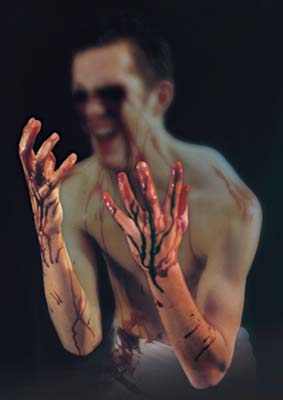 Oedipus-in
the back on the counter-Oedipus
kills a man as he runs away from his home in Corinth where it was prophesied
that he will kill his father and lay with his mother. He meets a man on the
road, they argue and Oedipus kills him. He then solves the riddle of the Sphinx
freeing the city of Thebes from a curse. He marries the queen, has four
children (two girls, two boys) and becomes king. The city is under a new curse
and a blind prophet tells Oedipus that it is his fault and that he is blind to
what is in front of his face. Oedipus believes Teiresias is working with Creon
to overthrow him and take the crown. Later a messenger reveals that Oedipus’
father is dead and that he can come home to Corinth to be king. Jocasta is ecstatic,
Oedipus still fears sleeping with Merope and refuses to go back. The messenger
then tells Oedipus that he was adopted by the king and queen and had nothing to
fear from the prophecy. Jocasta realizes that Oedipus is her son, runs away to
her room only to hang herself. Oedipus still needing more proof has a shepherd
retell what he knew of the old king and his baby with Jocasta. It is only then
that Oedipus realizes that he has fulfilled the prophecy. He looks for Jocasta,
cuts her down from her noose, gouges his own eyes out and exiles himself from
Thebes with Creon, the new king’s permission.
Oedipus-in
the back on the counter-Oedipus
kills a man as he runs away from his home in Corinth where it was prophesied
that he will kill his father and lay with his mother. He meets a man on the
road, they argue and Oedipus kills him. He then solves the riddle of the Sphinx
freeing the city of Thebes from a curse. He marries the queen, has four
children (two girls, two boys) and becomes king. The city is under a new curse
and a blind prophet tells Oedipus that it is his fault and that he is blind to
what is in front of his face. Oedipus believes Teiresias is working with Creon
to overthrow him and take the crown. Later a messenger reveals that Oedipus’
father is dead and that he can come home to Corinth to be king. Jocasta is ecstatic,
Oedipus still fears sleeping with Merope and refuses to go back. The messenger
then tells Oedipus that he was adopted by the king and queen and had nothing to
fear from the prophecy. Jocasta realizes that Oedipus is her son, runs away to
her room only to hang herself. Oedipus still needing more proof has a shepherd
retell what he knew of the old king and his baby with Jocasta. It is only then
that Oedipus realizes that he has fulfilled the prophecy. He looks for Jocasta,
cuts her down from her noose, gouges his own eyes out and exiles himself from
Thebes with Creon, the new king’s permission.

No comments :
Post a Comment