Sunday, January 27, 2013

Isn't it Romantic--wait or is it Transcendentalism...No, it's Dark Romanticiism

Okay, as we start to tie up the loose ends of the Romanticism period in English 11 you may want to review a few key things that will help ease your minds as you prepare for the final exam.

You will want to review some specific key terms; know what each of these terms are: archetype, allegory, rhythm, alliteration, onomatopoeia, lyceum movement, imagery, and figures of speech.


The short stories that are covered are The Devil and Tom Walker and Dr. Heidegger's Experiment.

 You will also be responsible for the excerpts from Emerson's Essays from "Nature" and "Self-Reliance"  and Edgar Allan Poe's famous poem "The Raven",  here is Vincent Price reading "The Raven" audio and a poor quality Youtube Simpson's version of "The Raven" Simpson's version.
Dr. Heidegger's Experiment
There are also limited Daily Oral Language sentence questions; I just want to make sure that you're awake when we're going over general grammar mistakes.

You will all do fine. Just take the time to review the literary terms and review each of the stories, excerpts as well as the poem. I know it seems like a lot, but really it's just remembering the story as well as paying attention in class, because you never know when I'll give an answer away.

--Mrs. Ordway


Saturday, January 26, 2013

"people can die of mere imagination" Chaucer's Cantebury Tales and the Middle Age

Chaucer--father of English Literature-
Ye Ole Big Papa
Modern Family--Frame Stories
Chaucer's Canterbury Tales are unique in that Chaucer was the first to develop the idea of a frame story. A frame story is a story within a story--think of the television show Modern Family--you know at the start how each separate family is holding a frame with their family's picture in it and at the end of the title sequence you realize that all of these crazy people are related to one another. See, frame story simply summed up--just to be clear, you realize you don't need an actual frame right? A frame story uses a metaphorical frame for the additional story told.
Pardoner's Tale
As we begin to say good-bye to the first semester we must first jump the hurdle that is the Canterbury Tales and the middle ages. Your final will consists of questions from the introduction of the middle ages (based on your notes), general information about the pilgrims going on the pilgrimage,  The Pardoner's Tale--modern English, you can also watch the Pardoner's Tale animated and  The Wife of Bath's Tale-modern English you may also watch the The Wife of Bath's Tale (animated).  The prologue before each tale are fair game as well.
Wife of Bath's Tale
 In addition to being tested on two of Chaucer's pilgrim stories you will be tested on SAT vocabulary from weeks 1-11. Unsure of what those vocabulary words are? Click on the the purple link to give you list of all the vocabulary for weeks 1-11.

Happy reviewing. Relax it's almost over--you're sooo close to being a grown-up.

Mrs. Ordway


Thursday, January 10, 2013

The Devil and Tom Walker-English 11

In class we're starting the Romantics off with "The Devil and Tom Walker", a short story by Washington Irving. If you talk about the romantics with most English 11 teachers we become giddy.


No, really we do.
The Devil and Tom Walker
Why you may ask? This is the genre that changes everything in American literature. everything. As Americans we began to formulate who we were as a nation--the people who write about what the common man was thinking, painting what the common man was seeing and singing about what the common man was feeling.

Washington Irving's,
Rip Van Winkle
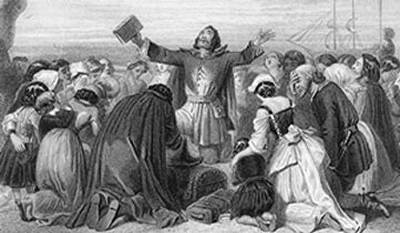
 Before this genere we were under the puritan command. Most believed that they were bound for hell since salvation was predetermined and heaven had limited occupancy. For the first time since leaving England (and perhaps having families able to add a second generation in America) the thinkers were able to leave religious restrictions behind and take time to notice their emotions.

Puritans Preaching
This ideal never existed before---well, it probably did, but it wasn't allowed to be shared openly for fear that it might get you killed to go against the social fabric of the puritans. I understand that to many of you this sort of writing seems so, 'yesterday', but please try to look at it through the eyes of those that lived during the 1800s. See the magic it has to offer.


Tuesday, January 8, 2013

Oh What a Knight! English 12


Geoffrey Chaucer


Courtly love, chivalry, feudalism, knighthood and kings oh my! Chaucer sounds pretty exciting right? I mean just take a gander at Chaucer over there. He's pretty on top of his game right? Who wouldn't want to be him?

The middle ages, while long ago, provided the opportunity to change the world and not always for the better.William the Conqueror brought a new way of life to the Anglo-Saxons--feudalism. This change wasn't necessarily for the better, but did allow for courtly love and chivalry to develop and change the way women see love. It was during the middle ages that many ideals began to form. Expectations of love that required no physical connection, but focused on love, adoration and a set of honor codes binding a knight to his lady love.

Sigh. Swoon.

Unfortunately for girls, this new aspect of love-- 'courtly love' didn't really impact their everyday lives in a positive way. They still remained subservient to the men in their lives. No sighs, no swooning. Boo. Boo.com

I have taken the liberty of creating a power point on the  Middle Ages--chapter two--you're welcome. This power point follows the introduction of the second chapter pretty succinctly. You will have a quiz on this introductory material. So, if you missed something in class or were absent please take a look at the material and write up your notes or add information that you may have missed.

Romanticism--this isn't your ordinary box of chocolates


"For me, Romanticism is the most recent and the most current expression of beauty"
--Charles Baudelaire
 Think of the term Romantic as an umbrella term. Within the label of "Romantic" you have transcendentalists--those that believe in the good that human nature reflects and nature as the link between one and God. Also under the umbrella (ella...ella...sorry, I couldn't resist) of the Romantics are the Dark Romantics--a group that acknowledged that human nature does indeed have a dark side and all that is found in nature is NOT good or connecting one with God.
The puritan's feared so many aspects of life that it isn't surprising that the Romanticism movement reacted so sharply to their fears. Much like teenagers reacting to their parents--if the puritans said the sky was robin's egg blue the romantics would describe it in great detail as being indigo.
 
 
In class we have discussed how the romanticism movement affected not only literature, but art as well. Remember, in this movement it is important to understand that human beings were not the central focus, but rather a piece in the universal puzzle. If you were absent take a look at the Romanticism power point and catch up with your notes. There will be a quiz on the introduction of the chapter two material so please, please make sure your notes are complete.